
PHEV vs Hybrid vs EV: Which Is Actually Cheapest to Run in Australia in 2026?
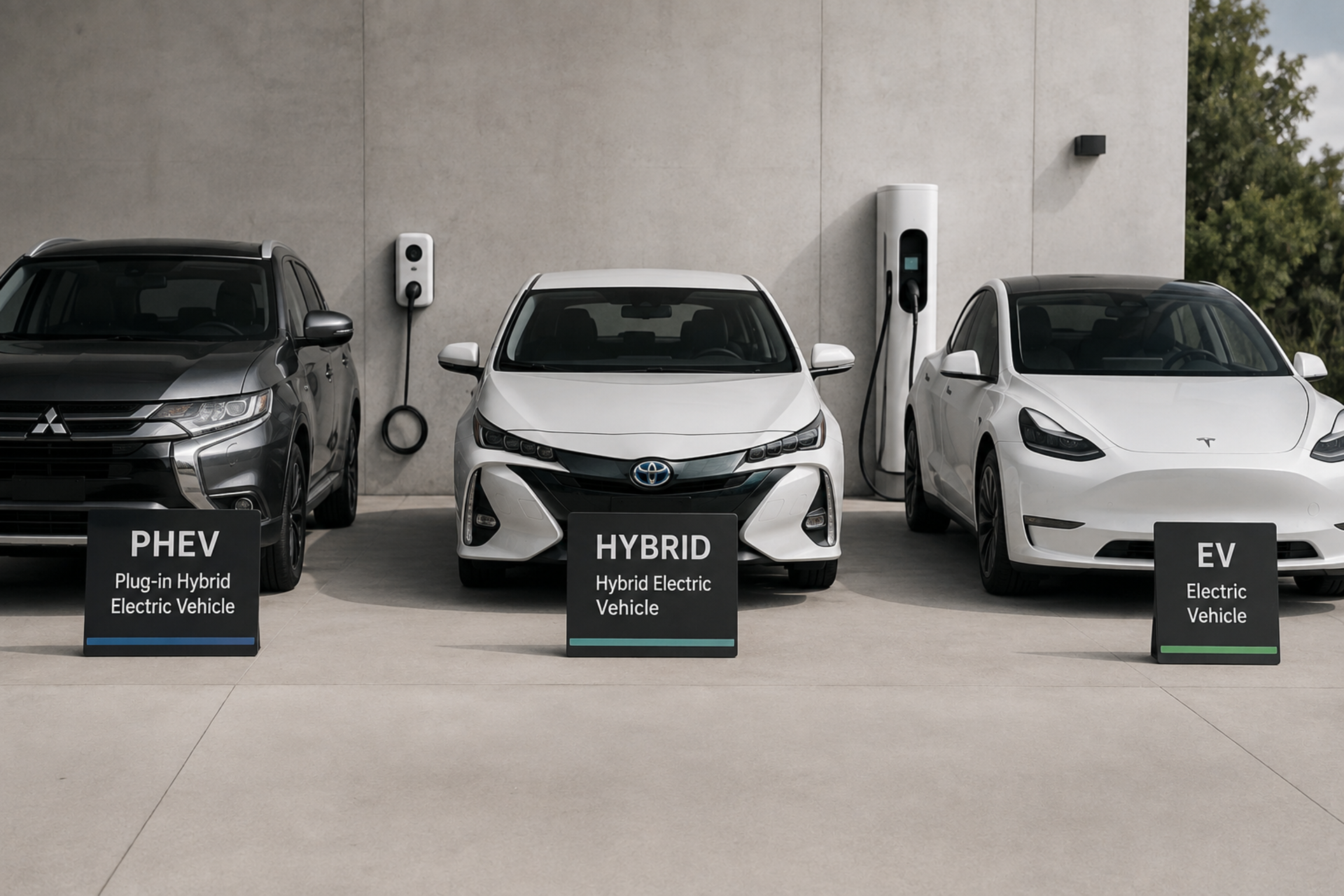
Petrol prices spiked hard through parts of 2026, electricity tariffs keep creeping up, and PHEVs just lost a major tax advantage. So when Australians ask which is actually the cheapest car to run Australia wide right now, the honest answer is: it depends on how you drive, where you charge, and how long you keep the car. This guide runs the actual numbers on PHEV vs Hybrid vs EV running costs — fuel and electricity, servicing, tax treatment and depreciation — so you can work out which one wins for your situation, not just in theory. If you're simply after the cheapest car to run Australia wide has to offer in 2026, the numbers below give you a straight answer.
What's the Actual Difference Between a PHEV, Hybrid and EV?
Before comparing costs, it's worth being clear on what each type of car actually is, since the cost differences flow directly from how each one is built.
• Hybrid (HEV): Runs on petrol with a small battery and electric motor that assists the engine and captures energy under braking. You never plug it in — the battery recharges itself as you drive.
• Plug-in Hybrid (PHEV): Has a bigger battery than a standard hybrid, giving it roughly 40–70km of real-world electric-only range. You plug it in to charge, and once the battery is depleted, it runs as a petrol hybrid.
• Electric Vehicle (EV/BEV): No petrol engine at all. Runs entirely on a battery that you charge from the grid, home solar, or public chargers.
This structural difference is exactly why running costs diverge so sharply once you start comparing PHEV vs Hybrid vs EV ownership over a full year rather than just at the dealership.
Purchase Price: Where Each Option Sits in 2026
| Vehicle Type | Typical Price Range (2026) | Notes |
| Hybrid (HEV) | $32,000 – $55,000 | Widest model range, mainstream availability |
| PHEV | $45,000 – $85,000 | Fewer models, often mid-size SUVs |
| EV (BEV) | $40,000 – $75,000 | Price gap to hybrids has narrowed significantly in 2026 |
EV prices have fallen faster than either rival category over the past two years as more affordable Chinese-built models have entered the Australian market, which is part of why the PHEV vs Hybrid vs EV conversation looks so different in 2026 than it did even three years ago.
Fuel and Charging Costs: The Real Numbers
This is where the cheapest to run 2026 question actually gets decided. Here's how the three types compare per 100km of driving.
| Vehicle Type | Energy Source | Approx. Cost / 100km (2026) |
| Petrol (non-hybrid, reference) | Petrol at ~$1.90–$2.00/L | $14 – $16 |
| Hybrid | Petrol, ~4.5–5L/100km | $9 – $10 |
| PHEV (charged regularly) | Electricity + occasional petrol | $4 – $8 |
| PHEV (rarely charged) | Mostly petrol, extra battery weight | $11 – $14 |
| EV (home, standard tariff) | Electricity at ~$0.28–$0.33/kWh | $4.50 – $5.50 |
| EV (home, off-peak tariff) | Electricity at ~$0.15–$0.20/kWh | $2.50 – $3.50 |
| EV (public DC fast charging) | Electricity at ~$0.45–$0.65/kWh | $7 – $11 |
The pattern here matters more than any single number: hybrid running costs Australia wide sit consistently in the middle, EV running costs Australia wide are the cheapest when charged at home, and PHEV running costs Australia wide swing wildly depending on one single habit — whether the owner actually plugs it in every night. Anyone genuinely comparing hybrid running costs Australia wide against a plug-in alternative needs to factor in that single variable before assuming a PHEV will automatically come out ahead.
Annual Running Cost: A Realistic Example
Take the average Australian driver covering roughly 15,000km a year, and assume a mid-size SUV in each category. This is where the cheapest car to run Australia wide question really comes into focus, once fuel and servicing are added together over a full year.
| Vehicle Type | Annual Fuel/Energy | Annual Servicing | Total Annual Cost |
| Hybrid | ~$1,400 | ~$350–$450 | ~$1,800 |
| PHEV (charged daily) | ~$900–$1,200 | ~$400–$550 | ~$1,400–$1,700 |
| PHEV (rarely charged) | ~$1,900–$2,200 | ~$400–$550 | ~$2,400–$2,700 |
| EV (home, standard) | ~$750 | ~$150–$300 | ~$950–$1,050 |
| EV (home, off-peak) | ~$450–$550 | ~$150–$300 | ~$650–$800 |
A disciplined PHEV owner who charges every night can land close to EV-level running costs. A PHEV owner who mostly forgets to plug in ends up paying more than a plain hybrid, because they're hauling around a heavier battery pack for no real fuel benefit — a trap that's easy to fall into and hard to notice on paper.
Servicing and Maintenance: Why EVs Pull Ahead
EVs have far fewer moving parts than either a hybrid or a PHEV — no oil changes, no exhaust system, no multi-speed transmission and far less brake wear thanks to regenerative braking. That's why EV running costs Australia wide typically come in lowest on servicing, often 30–50% cheaper per year than an equivalent hybrid.
PHEVs sit at the other end of the spectrum. They effectively combine two drivetrains — a full petrol engine and hybrid system, plus a larger battery and charging hardware — which means there are simply more components that can need attention. Owners routinely report PHEV running costs Australia wide climbing noticeably higher than either a comparable hybrid or a full EV on servicing alone, because a technician is maintaining both systems rather than one. By contrast, hybrid running costs Australia wide on the servicing side tend to stay predictable year to year, since the drivetrain has been in mainstream use for well over a decade.
Tax and Novated Lease Treatment: A Major 2026 Shift
This is the part of the PHEV vs Hybrid vs EV comparison that changed the most recently, and it has a real dollar impact for anyone salary packaging a car.
• PHEVs lost their Fringe Benefits Tax (FBT) exemption from 1 April 2025. Unless a PHEV was in a binding novated lease arrangement before that date, new PHEV leases are now taxed the same as a petrol car — wiping out what used to be a major cost advantage.
• EVs still qualify for the FBT exemption on vehicles priced under the luxury car tax threshold for fuel-efficient vehicles ($91,387 for 2025–26), meaning lease payments, insurance, servicing and charging can all be paid from pre-tax salary.
• Hybrids have never qualified for the FBT exemption, since they don't plug in and aren't classified as zero or low-emissions vehicles.
• The EV exemption itself is now on a countdown: full exemption continues to 31 March 2027, then narrows to EVs priced at $75,000 or less until April 2029, before shifting to a partial discount after that.
For anyone financing through a novated lease, this single policy change has pushed EVs well ahead of PHEVs on total cost of ownership — a gap that didn't exist a couple of years ago.
Depreciation: Which One Holds Its Value Best?
Depreciation doesn't show up in a per-100km calculation, but it's a real running cost over the life of the car, and it directly affects who wins the cheapest car to run Australia wide comparison once resale value is factored in.
• Hybrids, particularly established Japanese models, tend to hold value strongly thanks to long-standing reputations for reliability and low running costs.
• EVs were once assumed to depreciate faster, but as adoption has grown through 2026 and battery longevity data has matured, resale confidence has improved considerably for established brands.
• PHEVs are the category most at risk of accelerated depreciation right now, squeezed between cheaper full EVs on one side and cheaper, simpler hybrids on the other, with the loss of the FBT exemption further softening demand.
So, Which Is Actually the Cheapest to Run in 2026?
There's no single winner in the PHEV vs Hybrid vs EV debate — it comes down to how you actually use the car. If you're chasing the single cheapest to run 2026 has to offer, home-charged EVs currently top the list, but the right answer still depends on your driving pattern.
Choose an EV if you can charge at home (ideally on an off-peak or solar tariff), your daily driving fits comfortably within the car's range, and you want the lowest fuel, servicing and — for now — tax costs of the three.
Choose a hybrid if you don't have reliable access to home charging, do a lot of long-distance or unpredictable driving, and want low running costs without changing any of your habits.
Choose a PHEV only if you will genuinely plug it in every single day. Done properly, a PHEV can rival an EV on running costs while still offering petrol-engine backup for longer trips. Done half-heartedly, it becomes the most expensive of the three to run, combining the fuel bill of a petrol car with the servicing bill of two drivetrains.
For most Queensland and wider Australian drivers weighing up PHEV vs Hybrid vs EV in 2026, a well-charged EV now delivers the lowest total running cost, followed closely by a disciplined PHEV owner, with a standard hybrid as the reliable, no-fuss middle ground for anyone not ready to plug in at all.
Frequently Asked Questions
Is an EV cheaper to run than a hybrid in Australia?
Yes, in most cases. Charging an EV at home typically costs $4.50–$5.50 per 100km on a standard electricity tariff, and as little as $2.50–$3.50 on an off-peak tariff, compared with roughly $9–$10 per 100km for a petrol hybrid.
Are PHEV running costs really that different depending on charging habits?
Yes, significantly — this is the single biggest variable in PHEV running costs Australia wide. A PHEV charged daily can cost as little as $4–$8 per 100km, close to EV-level running costs. A PHEV that's rarely plugged in can cost $11–$14 per 100km, more than a standard hybrid, because it's carrying extra battery weight without the electric-only benefit.
Do PHEVs still get the FBT exemption on a novated lease in Australia?
No. PHEVs lost eligibility for the Fringe Benefits Tax exemption from 1 April 2025, unless they were already in a binding novated lease arrangement before that date. New PHEV leases are now taxed the same as a standard petrol vehicle.
Do EVs still qualify for the FBT exemption in 2026?
Yes. Battery electric vehicles priced under the luxury car tax threshold for fuel-efficient vehicles ($91,387 for 2025–26) still qualify for the full FBT exemption on a novated lease, though the exemption is scheduled to narrow from April 2027.
Is servicing cheaper for an EV than a PHEV?
Generally yes. EVs have far fewer moving parts and no oil changes, typically making servicing 30–50% cheaper per year than a comparable hybrid. PHEVs often cost more to service than either a hybrid or an EV, since they combine a full petrol drivetrain with battery and charging hardware.
What's the cheapest car to run in Australia right now — PHEV, hybrid or EV?
For most drivers with home charging access, an EV charged overnight on an off-peak tariff is currently the cheapest to run 2026 has on offer, followed by a PHEV charged daily, with a standard hybrid as the most consistent low-cost option for drivers without home charging.
Do hybrids ever end up cheaper to run than an EV?
It's uncommon, but possible for very high-mileage regional or long-distance drivers without home charging access, where public DC fast-charging costs for an EV can approach $7–$11 per 100km, narrowing the gap to a hybrid's roughly $9–$10 per 100km.